

Homemade vs Shop-Bought Baby Food: Which Is Best for Your Baby?


Starting solids comes with plenty of decisions. One of the most common is whether you should make your baby's food yourself or simply pick up a few ready-made pouches from the supermarket.
The good news? You don't have to choose just one.
Homemade baby food can be an affordable way to introduce your baby to a wide range of ingredients, flavours and textures. Shop-bought baby food, meanwhile, can be incredibly convenient when you're short on time or feeding away from home.
For many families, a combination of both works perfectly well.
What matters most is the overall variety of foods your baby is offered, including nutritious and iron-rich foods, and gradually introducing different tastes and textures as they develop.
Here's how homemade and shop-bought baby food compare, plus some practical tips for making either option work for your family.
Homemade vs shop-bought baby food at a glance
| What matters | Homemade baby food | Shop-bought baby food |
|---|---|---|
| Cost | Can be more economical, particularly when cooking in batches | Usually costs more per portion |
| Ingredients | You decide exactly what goes into each recipe | Ingredients are predetermined, so check the label |
| Convenience | Requires preparation, cooking and cleaning | Ready to serve with little or no preparation |
| Flavours | Easy to experiment with different ingredients and family foods | Wide variety available, depending on the range |
| Texture | You can adapt texture as your baby develops | Texture depends on the product and stage |
| Storage | Can be refrigerated or frozen in portions | Convenient shelf-stable or ready-to-use options |
| Portability | Needs suitable containers for taking out | Pouches and jars are easy to pack |
| Packaging | Reusable containers can reduce single-use packaging | Usually comes in single-use packaging |
Neither option has to be your only option. Your choice can change from day to day depending on your time, plans and what your baby needs.

Why choose homemade baby food?
Making your baby's meals yourself can be a great way to explore different ingredients and flavours together.
You control the ingredients
When you cook at home, you know exactly what you're putting into your baby's meal.
You can prepare simple combinations of vegetables, fruit, grains, beans, meat, fish and other suitable foods without needing to rely on a pre-made recipe.
It also makes it easier to introduce your baby to the flavours your family regularly eats.
It can save money
Cooking in batches can be much more economical than buying individual portions every day.
For example, you could cook a batch of vegetables, lentils or other suitable ingredients and divide them into baby-sized portions for later.
You can adjust the texture
Homemade food gives you more control over texture.
As your baby becomes more confident with food, you can gradually move beyond very smooth purées towards mashed, thicker and more textured foods, following NHS guidance and your baby's stage of development.
You can introduce more family flavours
Homemade meals don't have to mean making completely separate food for your baby.
As your baby becomes ready, suitable elements of your own family meals can be adapted for them. This can help make the transition towards eating family food feel more natural.
The main thing to remember is to avoid ingredients that aren't suitable for babies, including added salt and certain foods that carry food-safety risks.
What are the advantages of shop-bought baby food?
There is absolutely nothing wrong with keeping a few ready-made options in the cupboard or changing bag.
In fact, they can be incredibly useful.
It's convenient
This is probably the biggest advantage.
There's no peeling, chopping, steaming, blending or washing up. When you've got a hungry baby and very little time, being able to open a pouch can be a lifesaver.
It's useful when you're out
Shop-bought baby food is easy to put in your changing bag for days out, visits to family, holidays and other occasions when preparing food isn't practical.
There's plenty of choice
Supermarkets and baby-food brands offer a variety of combinations and textures designed for different stages of weaning.
Always check the packaging and age guidance, and look at the ingredients so you know what you're buying.
It can be useful on particularly busy days
Some days you'll have time to prepare a fresh meal. Other days you'll barely have time to drink your own cup of tea.
Having a few ready-made options available means you don't have to rely on having a perfectly organised meal-prep routine every single day.
Is homemade baby food healthier than shop-bought?
Not automatically.
Homemade food gives you greater control over ingredients and preparation, while commercially produced baby foods offer convenience and are made under food-safety requirements.
Rather than focusing on which option is "better", think about what your baby is being offered across the week.
The NHS recommends introducing a variety of foods when your baby is ready for solids, including foods containing iron, and gradually increasing the range of tastes and textures.
It's also important to remember that purées don't need to be the only food your baby eats. As they develop, offering appropriate mashed, lumpy and finger foods helps them learn about different textures and how to eat independently.
For more information, see the NHS guidance on introducing solid foods.
What about sugar and salt in baby food?
When buying ready-made baby food, checking the ingredients and nutritional information is a good habit.
Babies don't need added salt or sugary foods, so look for options that fit within appropriate infant feeding guidance.
It's also worth remembering that some ingredients naturally contain sugar. For example, fruit will naturally taste sweet without having sugar added to it.
For homemade food, you have complete control over what you add, making it easy to prepare meals without added salt or sugar.

Which option should you choose?
There isn't one answer that works for every family.
Homemade might suit you if:
-
You enjoy cooking and have time to prepare meals.
-
You want greater control over ingredients.
-
You'd like to batch-cook and freeze portions.
-
You want to experiment with different flavours and textures.
-
You're trying to keep food costs down.
Shop-bought food might suit you if:
-
You need something quick and convenient.
-
You're regularly feeding your baby away from home.
-
Your schedule changes from day to day.
-
You don't have time to cook every meal.
-
You want a few emergency meals available.
Or simply use both
For many parents, this is the easiest approach.
You might make homemade meals during the week, then keep a couple of shop-bought pouches in the changing bag for days out.
There is no need for every meal to be homemade.
How to make homemade baby food easier
The biggest obstacle to homemade baby food is often not the cooking itself — it's the time and cleaning involved.
Batch preparation can make things much simpler.
Instead of preparing one meal from scratch every day, set aside some time to prepare several portions at once.
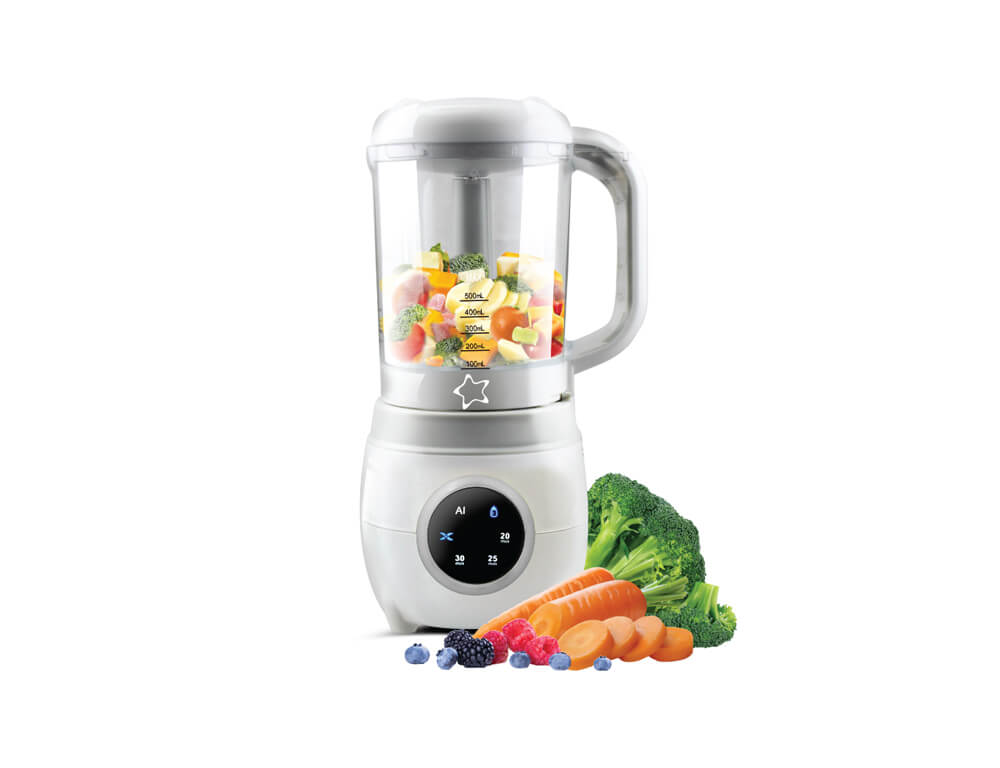
A baby food maker can make this even easier by combining cooking and blending in one appliance.
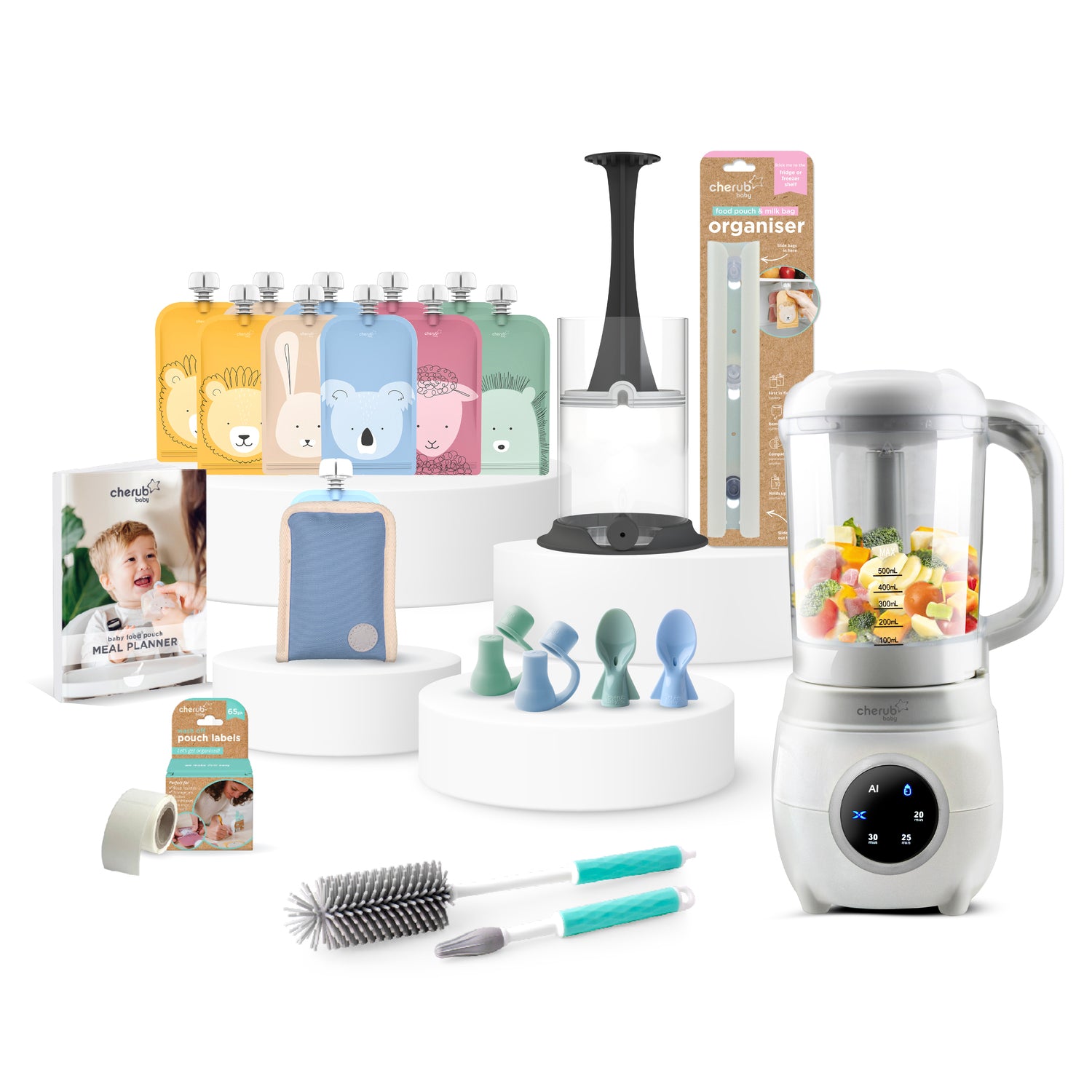
The Cherub Baby Baby Food Maker is designed to help steam and blend food with less hands-on preparation. The 4-in-1 Baby Food Maker & Steriliser also combines steaming, blending, warming and sterilising functions.
You can then portion suitable foods into reusable food pouches, making homemade meals easier to store and take with you.
Making homemade baby food ahead of time
Batch cooking can be particularly useful once your baby is eating solids regularly.
You could prepare a few different foods and divide them into small portions rather than making one large batch of the same meal.
For example:
-
Steamed vegetables
-
Fruit purées
-
Mashed vegetables
-
Lentil or bean-based meals
-
Suitable meat or fish dishes
-
Homemade combinations using foods your baby has already tried
Label stored food with the date and follow current NHS food-safety guidance for refrigeration, freezing, thawing and reheating.
For detailed information about storing homemade baby food, check the NHS guidance on storing and preparing food for babies.
Reusable pouches: a convenient middle ground
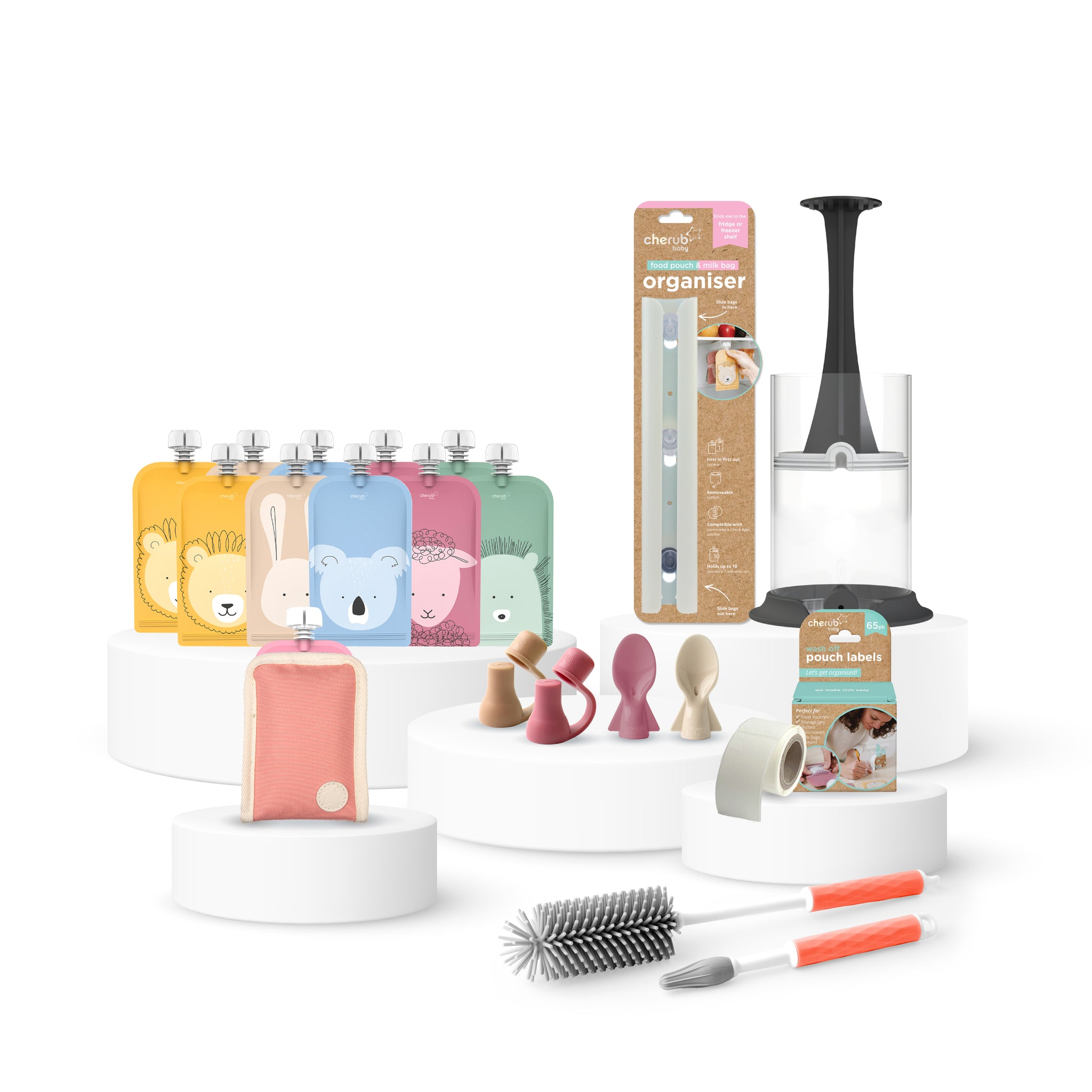
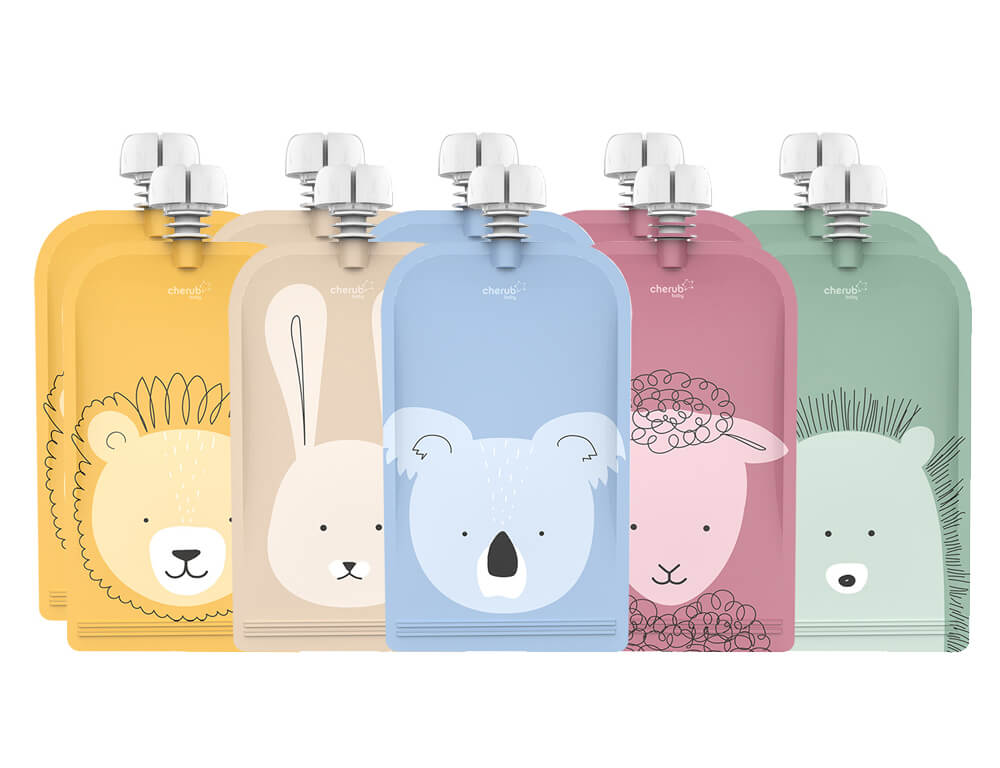
One of the easiest ways to combine the benefits of homemade food with the convenience of a pouch is to use reusable food pouches.
Prepare your baby's food at home, portion it into a reusable pouch and store it according to food-safety guidance.
When you're heading out, you can simply take the appropriate portion with you.
This can be especially useful for:
-
Days out
-
Nursery or childcare
-
Visits to family
-
Holidays
-
Road trips
-
Quick meals between activities
Explore the Cherub Baby reusable food pouch collection for options designed for storing homemade baby food.
Homemade or shop-bought: the answer can change every day
Some days you might have the time and energy to prepare a fresh homemade meal.
Other days, opening a ready-made pouch is exactly what you need.
That's okay.
Weaning doesn't have to be perfect. What matters is gradually helping your baby discover different foods, flavours and textures while following appropriate feeding and food-safety guidance.
Homemade and shop-bought baby food can both have a place in your baby's weaning journey.
Choose what works for your family on the day — and don't feel guilty about making the convenient choice when life gets busy.
Frequently asked questions
Is homemade baby food better than shop-bought?
Not necessarily. Both can form part of a varied diet for your baby.
Homemade food gives you control over ingredients and texture, while shop-bought food offers convenience and can be particularly useful when you're short on time or feeding away from home.
Is shop-bought baby food safe?
Commercial baby food is produced under food-safety requirements. Always check the packaging, ingredients, age guidance and storage instructions before giving it to your baby.
Is homemade baby food cheaper?
It can be, particularly if you cook larger batches and use seasonal ingredients. Freezing suitable portions can also help reduce waste and make future meals easier.
Can I combine homemade and shop-bought baby food?
Yes. You can use homemade food when you have time and shop-bought options when you're busy or away from home.
Using both can be a practical way to make weaning fit around your family's routine.
When should I introduce different textures?
As your baby becomes ready for solid foods, gradually introduce different textures rather than keeping them on smooth purées indefinitely.
Follow current NHS guidance and your baby's individual stage of development. If you're unsure about your baby's readiness or feeding progression, speak with your health visitor or GP.
How can I make homemade baby food more quickly?
Batch cooking can save time because you prepare several portions in one session.
A baby food maker that steams and blends can also reduce the amount of equipment and hands-on preparation needed. Portioning meals into reusable pouches or suitable storage containers means they're ready for future meals.
How should I store homemade baby food?
Storage depends on the type of food and how it has been prepared.
Use suitable food-safe containers, label portions with the date and follow current NHS guidance for refrigeration, freezing, thawing and reheating. Avoid relying on a generic storage time for every type of homemade baby food, as different foods have different requirements.


