

Breast Milk Storage Guide: A Simple Quick-Reference Guide for UK Parents


Expressing breast milk can give you more flexibility when you're feeding your baby, whether you're preparing a bottle for later, returning to work or simply building a small supply for busy days.
Knowing how to store expressed milk safely can make the whole process feel much easier. From the fridge to the freezer, here's a simple UK-focused guide to storing, thawing and warming breast milk.
Quick tip: Save this guide or bookmark it so you can easily check the storage recommendations when you need them.
Breast Milk Storage Guide at a Glance
For healthy babies at home, the NHS currently recommends the following storage guidance:
| Storage method | Recommended storage time |
|---|---|
| Fridge at 4°C or below | Up to 8 days |
| Fridge above 4°C | Use within 3 days |
| Fridge ice compartment | Up to 2 weeks |
| Freezer at -18°C or below | Up to 6 months |
| Cooled breast milk in a cool bag with ice packs | Up to 24 hours |
| After your baby has started drinking from the bottle | Use within 1 hour, then discard leftovers |
Always check the temperature of your fridge or freezer if you're unsure. If your baby is premature or unwell, or is receiving care in hospital, follow the storage instructions provided by your healthcare team, as different recommendations may apply.

How to Store Expressed Breast Milk Safely
A few simple habits can help keep expressed milk safe and make it easier to manage your supply.
1. Wash your hands
Wash your hands thoroughly before expressing or handling stored breast milk. Your breast pump and storage containers should also be clean and sterilised before use.
2. Choose the right storage container
Expressed milk can be stored in a sterilised container with a secure lid or in a purpose-designed breast milk storage bag.
If you're freezing milk, storing it in smaller quantities can make it easier to defrost only what your baby needs and help reduce waste.
3. Label and date your milk
Always label your stored milk with the date it was expressed. If you're building a freezer supply, using the oldest milk first can help you keep your supply organised.
4. Store milk in the coldest part of the fridge
Keep expressed milk towards the back of the fridge rather than in the door. The temperature is generally more consistent towards the back.
5. Leave room when freezing
Breast milk expands as it freezes, so don't fill storage bags or containers completely to the top. Follow the manufacturer's instructions for the product you're using.
How Long Does Breast Milk Last in the Fridge?
If your fridge is maintained at 4°C or below, the NHS says expressed breast milk can be stored for up to 8 days. If you're unsure that your fridge stays at 4°C or below, the NHS recommends using the milk within 3 days.
Keeping a fridge thermometer can be useful if you're regularly expressing and storing milk.
For everyday organisation, you may find it helpful to place newly expressed milk behind older milk and use the oldest portion first.
How Long Can Breast Milk Be Frozen?
Breast milk can be stored for up to 6 months in a freezer at -18°C or below, according to current NHS guidance. An ice compartment within a fridge can be used for up to 2 weeks.
If you're freezing milk regularly, smaller portions can make it easier to thaw exactly what you need while reducing waste.
Remember to label each portion with the date before placing it in the freezer.
How to Thaw Frozen Breast Milk
The easiest way to thaw frozen breast milk is to move it from the freezer into the fridge and allow it to defrost gradually.
If you need the milk sooner, the NHS advises placing the container in a jug of warm water or holding it under warm running water.
Never thaw or heat breast milk in a microwave.
Microwaves can heat milk unevenly and create hot spots that could burn your baby's mouth.
Once breast milk has been defrosted, it should not be refrozen.

Does Breast Milk Need to Be Warmed?
Not necessarily.
Some babies are perfectly happy to drink expressed breast milk straight from the fridge. If your baby prefers it warmer, you can gently warm the milk by placing the container in warm water or holding it under warm running water.
The NHS recommends warming breast milk to around body temperature and avoiding microwaves and direct heating on the hob.
Before feeding, gently mix the milk if it has separated and check the temperature.
What About Leftover Breast Milk?
If your baby has started drinking from a bottle of expressed breast milk, the NHS recommends using it within 1 hour and throwing away anything left afterwards.
Although it can be tempting to save unfinished milk, your baby's saliva can introduce bacteria into the bottle once feeding has started.
To reduce waste, try storing milk in smaller portions so you only warm what your baby is likely to drink.
Taking Expressed Milk Out and About
Expressing doesn't have to stop you from leaving the house.
If you have cooled breast milk that you're taking with you, the NHS says it can be carried in a cool bag with ice packs for up to 24 hours.
This can be particularly useful when you're:
-
Returning to work
-
Going out for the day
-
Travelling
-
Taking milk to your baby's carer
-
Pumping between feeds
Once you arrive at your destination, transfer the milk to a suitable fridge or freezer as soon as possible.
Making Breast Milk Storage Easier
Having the right storage products can make expressing and organising milk much simpler.
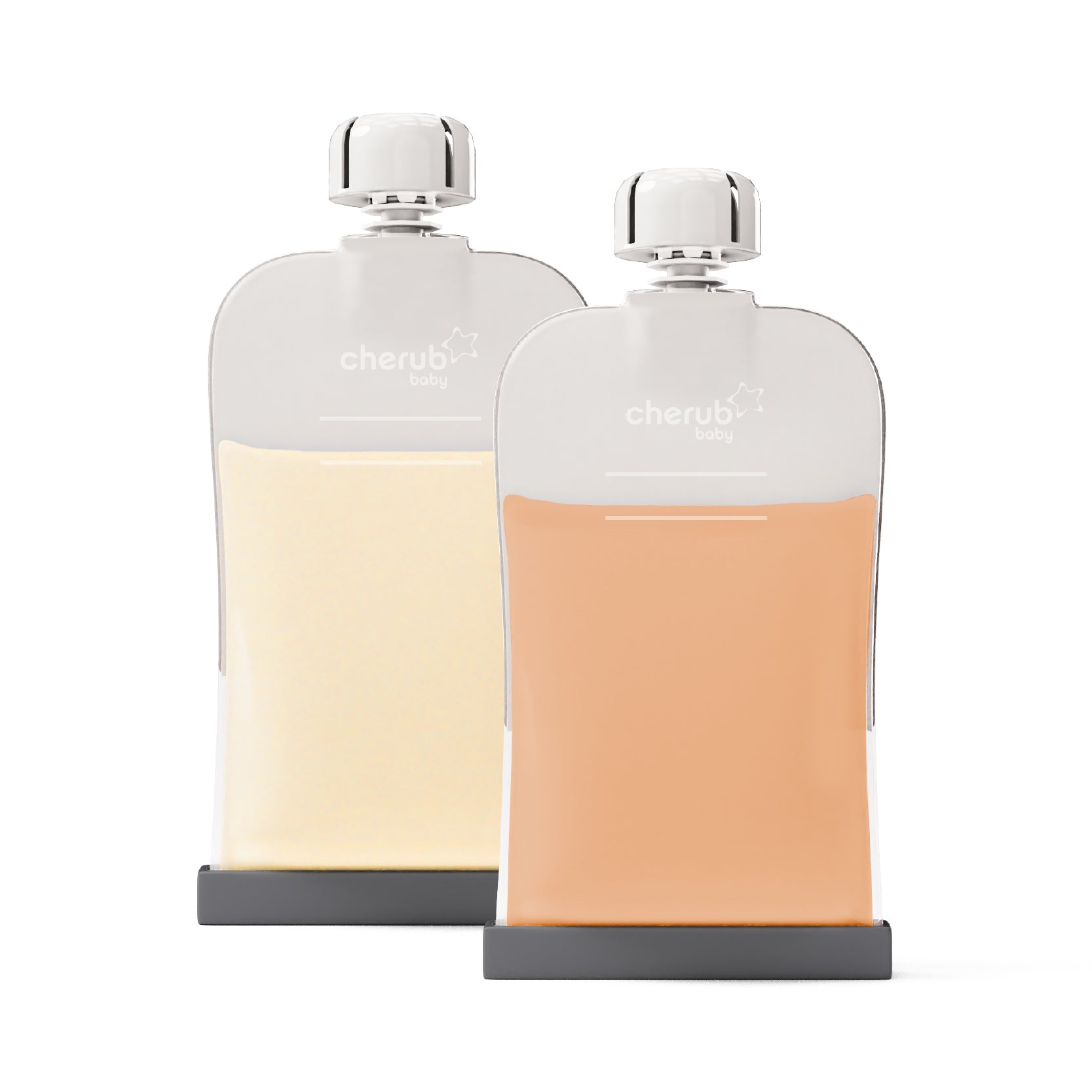
Reusable silicone breast milk pouches can be useful for parents who want a reusable option for storing expressed milk. Their flexible design can also make them convenient for organising portions in the freezer.
When choosing a storage product, always check that it is specifically designed for breast milk and follow the manufacturer's instructions for cleaning, sterilising, freezing and reuse.
Cherub Baby's Reusable Silicone Breast Milk & Food Pouches are designed to provide a reusable storage option for expressed breast milk and can also be used for food storage as your little one moves into solids.

A Simple Breast Milk Storage Routine
If you're new to expressing, keeping your routine simple can help.
Express → Label → Chill or freeze → Use oldest first → Thaw safely → Warm gently if needed
For example, if you're expressing during the day:
-
Express your milk using clean, sterilised equipment.
-
Transfer it into a suitable labelled storage container or bag.
-
Refrigerate or freeze it as soon as possible.
-
When you need it, use the oldest suitable portion first.
-
Thaw frozen milk in the fridge or using warm water.
-
Gently mix the milk and check the temperature before feeding.
Frequently Asked Questions
How long does expressed breast milk last in the fridge?
The NHS says expressed breast milk can be stored for up to 8 days at 4°C or below. If your fridge is warmer than 4°C or you're unsure of its temperature, use the milk within 3 days.
How long can breast milk be kept in the freezer?
Breast milk can be stored for up to 6 months at -18°C or below. Milk kept in an ice compartment within a fridge can be stored for up to 2 weeks.
Can I freeze expressed breast milk?
Yes. Expressed breast milk can be frozen in a suitable sterilised container or breast milk storage bag. Leave some space for expansion and label it with the date before freezing.
Can I refreeze thawed breast milk?
No. Once breast milk has been defrosted, it should not be refrozen. Follow the NHS guidance for using thawed milk safely.
Can I warm breast milk in the microwave?
No. The NHS advises against microwaving breast milk because it can create hot spots that could burn your baby's mouth. Warm it gently using warm water instead.
Do I have to warm expressed breast milk?
No. Some babies are happy to drink expressed milk cold from the fridge. If your baby prefers warmer milk, gently warm it using warm water and check the temperature before feeding.
How should I transport expressed breast milk?
If the milk has already been cooled, you can transport it in a cool bag with ice packs for up to 24 hours, according to NHS guidance.
Can I store breast milk if I'm returning to work?
Yes. Expressing and storing milk can be useful when you're returning to work or spending time away from your baby. Plan ahead with your workplace or childcare provider so you have access to suitable facilities for expressing and storing milk. The NHS also provides guidance for breastfeeding and returning to work.
A Quick Reminder for Parents
Breast milk storage can seem complicated at first, but once you have a simple system in place, it becomes much easier.
Keep your equipment clean, label your milk, store it at the right temperature and thaw it safely.
And remember, storage recommendations can vary for babies who are premature or unwell. If you're unsure about what's appropriate for your baby, speak to your midwife, health visitor, GP or breastfeeding support service.
For the most up-to-date UK recommendations, always check the latest NHS guidance on expressing and storing breast milk.


