

The Easy Way to Make Homemade Baby Food: A Simple Guide for UK Parents


The Easy Way to Make Homemade Baby Food: A Simple Guide for UK Parents
Making homemade baby food doesn’t have to mean spending hours in the kitchen. With a simple routine, you can prepare nutritious meals for your little one, make several portions at once and keep them ready for busy days.
One of the easiest approaches is to steam ingredients until soft, blend them to the texture your baby needs, and prepare extra portions for later. With the right tools, you can make the process even simpler and spend less time cooking and cleaning.
Here’s a practical guide to making homemade baby food easier for everyday family life.
Why make homemade baby food?
Starting solids is an exciting stage, but it can also feel overwhelming. There are new foods to introduce, different textures to explore and plenty of questions about what your baby should be eating.
Making food at home gives you control over the ingredients and allows you to experiment with different flavours and textures as your baby develops.
According to the NHS, babies can usually start having solid foods at around 6 months, alongside breast milk or infant formula. As they become more confident with food, offering a variety of flavours and textures can help them become familiar with different foods.
Homemade baby food can also be a practical option for parents who want to prepare meals in advance rather than making something from scratch every day.

The simple steam-and-blend method
Traditionally, making baby food can involve a saucepan, steamer, blender and several dishes to wash afterwards. A baby food maker that combines steaming and blending can simplify the process by allowing you to prepare food in one appliance.
Here’s how it works:
-
Prepare your ingredients – Wash, peel and cut fruit, vegetables or other ingredients into small pieces.
-
Steam until soft – Steam the ingredients until they are thoroughly cooked and soft enough to blend.
-
Blend to the right texture – Blend the cooked food until it reaches a consistency suitable for your baby's stage.
-
Cool and portion – Allow the food to cool before dividing it into portions.
-
Serve or store – Serve straight away, refrigerate for later use or freeze suitable portions.
A combined steamer and blender can help reduce preparation time and washing up, making homemade meals much more manageable for busy parents.
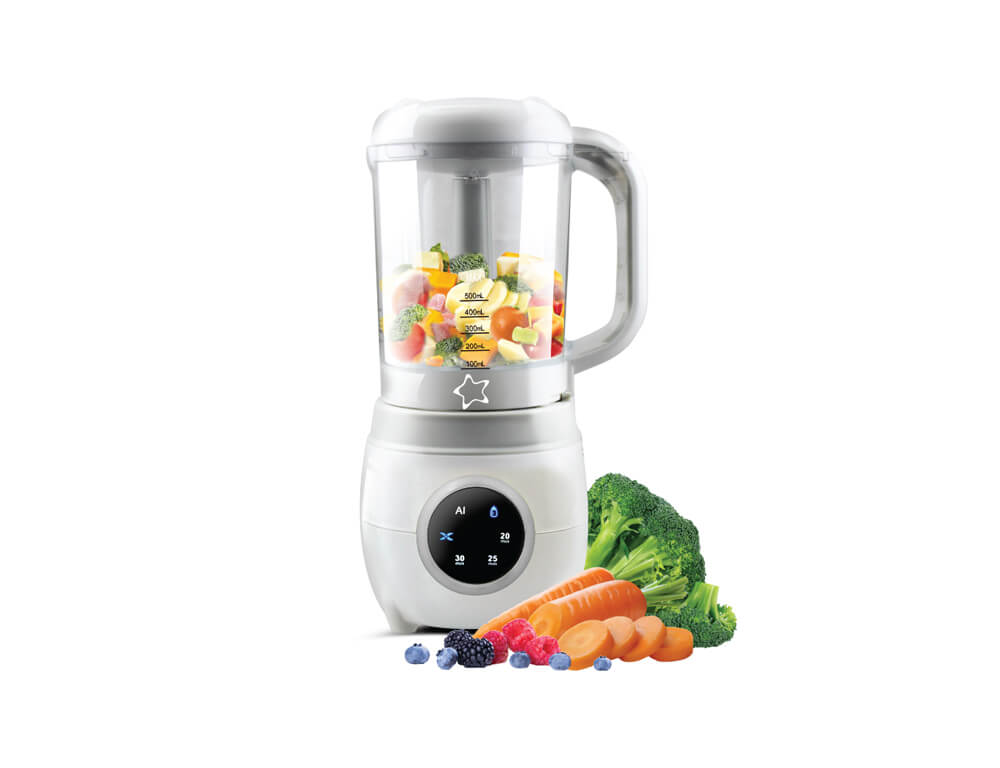
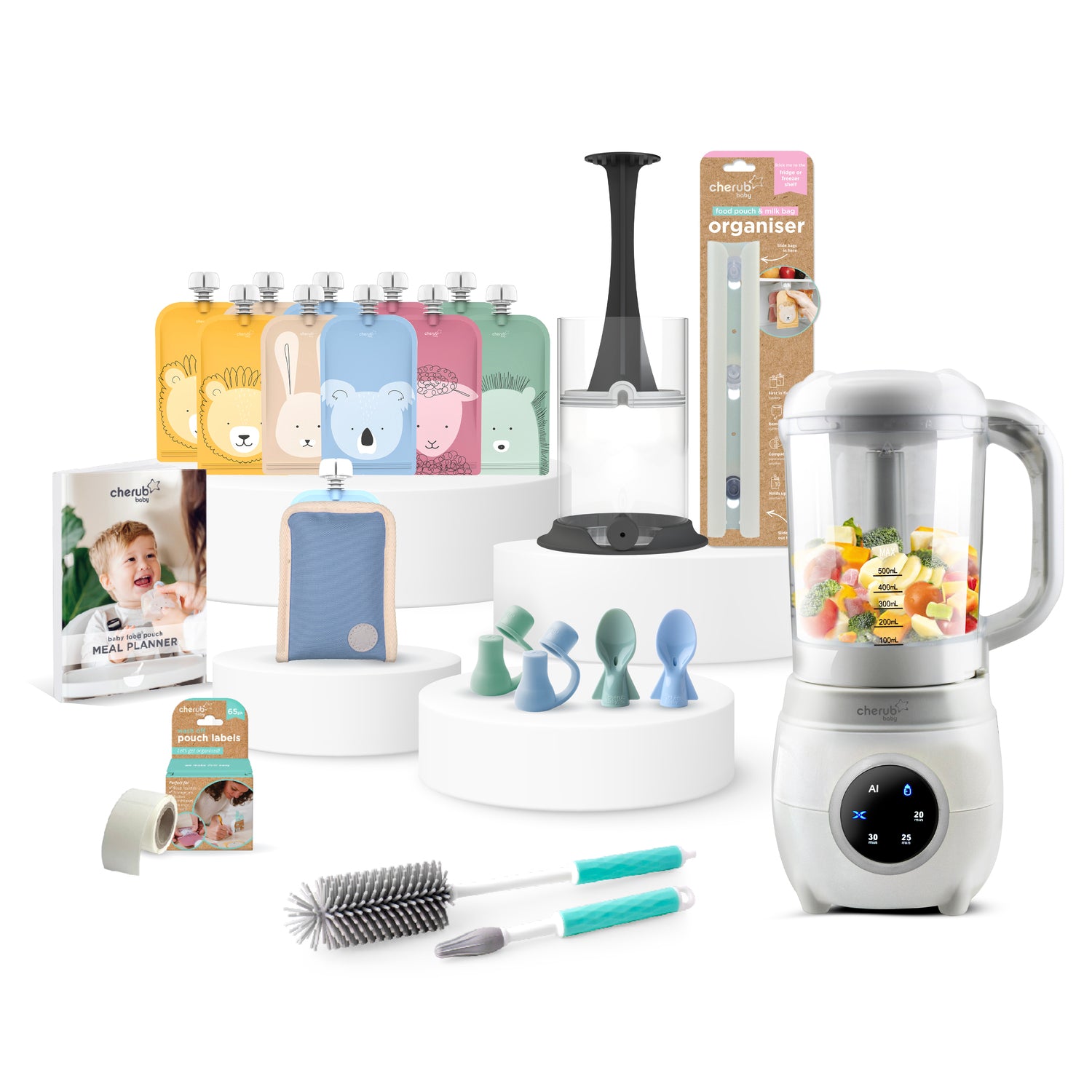
Our Cherub Baby Automatic Baby Food Maker is designed to steam, blend, sterilise and warm, helping you prepare baby food with less equipment and less mess.
Batch cooking: your biggest time-saver
You don't need to prepare every meal from scratch.
Instead, try setting aside a little time once or twice a week to prepare several portions at once. You can cook a few different ingredients, blend them separately or combine them into different flavour combinations, then portion everything for later.
Reusable food pouches and food storage containers are particularly useful for batch preparation.
You can portion out homemade purées, freeze them and have convenient servings ready for another day. This can be especially helpful when you're juggling mealtimes with naps, work, nursery runs and everything else that comes with family life.
A simple batch-cooking routine
Choose your ingredients → Cook → Blend → Portion → Label → Store
For example, you could prepare:
-
Sweet potato purée
-
Carrot and apple
-
Pear and oat
-
Broccoli and potato
-
Lentil and vegetable purée
As your baby becomes more comfortable with solids, you can gradually introduce more ingredients, flavours and textures.
Easy foods to prepare at home
There are plenty of simple ingredients that work well for homemade baby food.
For early purées, you could try soft-cooked vegetables and fruits such as:
-
Sweet potato
-
Carrot
-
Pumpkin
-
Broccoli
-
Courgette
-
Apple
-
Pear
-
Avocado
As your baby's diet develops, you can introduce a wider range of foods, including iron-rich options such as meat, beans, lentils and iron-fortified cereals.
Remember that babies develop at different rates, so the texture of food should be appropriate for your baby's stage and ability to eat safely.
Don't be afraid of texture
Smooth purées can be useful when your baby is first learning about food, but you don't need to stay with completely smooth foods forever.
As your baby becomes more confident, gradually introducing thicker, mashed and lumpier textures can help them learn how to manage different foods.
You can also offer appropriately prepared soft finger foods alongside spoon-fed meals, depending on your baby's development and readiness.
The goal isn't to make every meal perfectly smooth. It's to help your baby become comfortable with a variety of tastes, textures and foods.

Store homemade baby food with ease
Preparing food in advance is only helpful if you have an easy way to store it.
Reusable silicone food pouches are a convenient option for portioning homemade purées, snacks and meals. They can be filled, stored and taken with you when you're out and about.
For parents who prefer glass, reusable glass food storage containers are another practical option for preparing and storing homemade baby food.
Whichever storage method you choose, always follow appropriate food-safety practices and the manufacturer's storage instructions.

Homemade baby food for busy days
One of the biggest advantages of batch cooking is having food ready when you need it.
A freezer stocked with small portions can take some of the pressure out of mealtimes. Instead of starting from scratch when your baby is hungry, you can simply take out an appropriate portion, thaw it safely and prepare it for serving.
It can also make days out easier. Fill a reusable food pouch with a suitable homemade meal or snack and take it with you for feeding on the go.
A little preparation can make a surprisingly big difference during a busy week.
Simple baby food preparation tips
1. Start small
You don't need to prepare ten different recipes at once. Start with a couple of ingredients your baby is familiar with and build from there.
2. Cook in batches
Making several portions together saves time compared with cooking one meal at a time.
3. Use small portions
Small portions are easier to thaw and help reduce food waste.
4. Label everything
When freezing homemade baby food, label containers or pouches with the food and date so you know what you've prepared.
5. Introduce variety
Once your baby is comfortable with individual foods, try combining different flavours and ingredients.
6. Keep textures moving forward
As your baby develops, gradually progress from smooth foods to mashed, thicker and lumpier textures when appropriate.
Frequently Asked Questions
What is the easiest way to make homemade baby food?
A simple approach is to steam ingredients until soft, blend them to the desired consistency and prepare several portions at once. A combined baby food maker can make this even easier by allowing you to steam and blend using the same appliance.
Do I need a baby food maker?
Not at all. You can make baby food using a saucepan, steamer, blender or stick blender. However, a combined baby food maker can make the process more convenient by reducing the number of appliances and dishes involved.
What are good foods to make for babies?
Soft fruits and vegetables such as sweet potato, carrot, broccoli, pear and apple are simple ingredients to prepare. As your baby progresses with solids, you can introduce a wider variety of foods, including iron-rich foods such as meat, beans and lentils.
Can I batch-cook baby food?
Yes. Batch cooking can be a convenient way to prepare several portions at once. Divide the food into suitable portions and store them safely according to NHS and food-safety guidance.
Can homemade baby food be frozen?
Many homemade baby foods can be frozen. Allow freshly cooked food to cool before freezing, use suitable containers or pouches, label them with the date and follow recommended food-safety guidance for storage and thawing.
Are reusable baby food pouches useful?
Reusable pouches can make portioning and transporting homemade baby food more convenient. They're particularly useful for parents who want to prepare food at home and take it with them when they're out.
Make homemade baby food simpler
Homemade baby food doesn't need to be complicated. With a little planning, batch cooking and the right storage solutions, you can make nutritious meals for your baby without spending hours in the kitchen.
From steaming and blending to portioning and freezing, creating a simple routine can make the transition to solids feel much more manageable.
Prepare once, portion ahead and make mealtimes a little easier — one homemade meal at a time.


