

Silicone vs Plastic Reusable Baby Food Pouches: Which Is Better?


Reusable food pouches can make feeding babies and toddlers much more convenient, especially when you're preparing homemade purees, yoghurt, snacks or meals ahead of time.
But with so many options available, one question comes up often: should you choose silicone or plastic reusable food pouches?
Both materials have their advantages. Plastic pouches tend to be lightweight and more affordable initially, while silicone pouches are generally more durable and versatile for everyday use. The best choice ultimately depends on your family's routine, how frequently you'll use the pouches and what features matter most to you.
Here's a closer look at the differences between silicone and plastic reusable food pouches.
At a Glance
| Feature | Silicone Pouches | Plastic Pouches |
|---|---|---|
| Durability | Excellent and designed for repeated use | Moderate and may need replacing sooner |
| Freezer use | Generally well suited to freezing | Depends on the material and manufacturer |
| Heat resistance | Generally handles a wider range of temperatures | More limited, depending on the plastic |
| Cleaning | Often easier with a wide opening | Can be more difficult if the opening is narrow |
| Weight | Slightly heavier | Lightweight |
| Initial cost | Usually higher | Usually lower |
| Long-term value | Can offer good value due to longevity | May cost more over time if replaced frequently |
| Environmental considerations | Long lifespan can reduce replacement waste | Shorter lifespan can mean more frequent replacements |
Safety: What Are Reusable Pouches Made From?
When choosing feeding products for your baby, the material is naturally an important consideration.
High-quality reusable food pouches should be made from materials intended for food contact and should meet applicable safety requirements. Many products are also manufactured without substances such as BPA, PVC and phthalates.
Food-grade silicone is widely used in baby feeding products because it is flexible, durable and resistant to temperature changes. It also tends to resist absorbing food smells and flavours.
Plastic reusable pouches can be made from different materials, including PEVA and TPU. Their properties can vary depending on the specific material and construction, so it is important to check the manufacturer's specifications rather than assuming every plastic pouch has the same capabilities.
Whichever material you choose, safe food preparation, storage, cleaning and handling are equally important.

Durability and Everyday Use
One of the biggest differences between silicone and plastic is how they hold up to repeated use.
Silicone is flexible and resistant to tearing, making it well suited to products that are filled, squeezed, washed and stored repeatedly. A good-quality silicone pouch can remain useful for a long time when properly cared for.
Plastic pouches can also be reusable, but their lifespan depends heavily on the material and construction. With frequent use, areas such as seams, closures and spouts may eventually show signs of wear.
If you're planning to use reusable pouches every day for several years, durability is worth considering alongside the initial purchase price.
Freezing, Warming and Temperature
For parents who prepare homemade baby food in batches, temperature flexibility can be particularly useful.
Silicone generally performs well across a broad range of temperatures, making it suitable for many freezer and food-storage applications. This means you can prepare portions ahead of time and store them for later use, provided the pouch is specifically rated for freezing.
Plastic pouches can also be suitable for freezer storage, but their temperature limits vary considerably depending on the material and manufacturer.
The same applies to heating. Never assume that a reusable pouch is suitable for microwaving or hot food simply because it is reusable. Always follow the manufacturer's instructions for the specific product.
If you regularly batch-cook baby food, choose a pouch that clearly states whether it is suitable for freezing, heating, dishwasher cleaning and other parts of your routine.
Cleaning: Which Is Easier?
Reusable products need to be cleaned thoroughly after every use, so the design of the pouch can make a surprisingly big difference.
Silicone pouches with a wide opening are often easier to clean because you can see and reach more of the inside. This makes it easier to remove leftover food and inspect the pouch before storing it.
Pouches with narrow openings can require a little more attention, particularly around the corners, seams and spout.
Regardless of the material, a few habits can help keep reusable pouches fresh:
- Rinse or wash them soon after use.
- Use an appropriate brush to clean the spout and hard-to-reach areas.
- Follow the manufacturer's dishwasher instructions.
- Allow the pouch to dry completely before storing it.
- Regularly inspect the pouch for signs of damage or wear.
Proper drying is particularly important because moisture left inside a closed pouch can contribute to unpleasant odours and hygiene problems.

Cost: Is Cheaper Always Better?
Plastic pouches generally have a lower upfront price, which can make them attractive when you're first trying reusable pouches.
However, the purchase price isn't the only cost to consider. If a pouch needs to be replaced more frequently, the total cost over several years can become considerably higher.
Silicone products often cost more initially but can provide better long-term value because they are designed for repeated use over an extended period.
Think about how often you'll use the pouches. If they're going to be part of your daily feeding routine, investing in a durable option may make more sense than repeatedly replacing cheaper alternatives.
Silicone Pouches: Pros and Cons
Pros
- Durable and flexible
- Designed for repeated use
- Generally well suited to freezing
- Often suitable for a wider range of temperatures
- Wide-opening designs can be easier to clean
- Can provide good long-term value
- Suitable for homemade baby food, snacks and other foods
Cons
- Usually more expensive initially
- Can be slightly heavier than plastic alternatives
- Some designs may take up more space when not filled
Plastic Pouches: Pros and Cons
Pros
- Lightweight
- Usually more affordable initially
- Easy to carry in a nappy bag or lunch bag
- Soft and flexible
- Familiar squeeze-pouch format
Cons
- Lifespan varies depending on the material and construction
- Some types have more limited temperature capabilities
- Narrow designs can be harder to clean
- May require replacement sooner with frequent use
Which Type Is Right for Your Family?
There's no single answer for every family.
Silicone may be the better choice if you're looking for a durable pouch that you can use regularly for homemade baby food, freezer storage and everyday feeding. It can be particularly useful for families who batch-prepare meals and want a reusable option that will continue to be useful as their child grows.

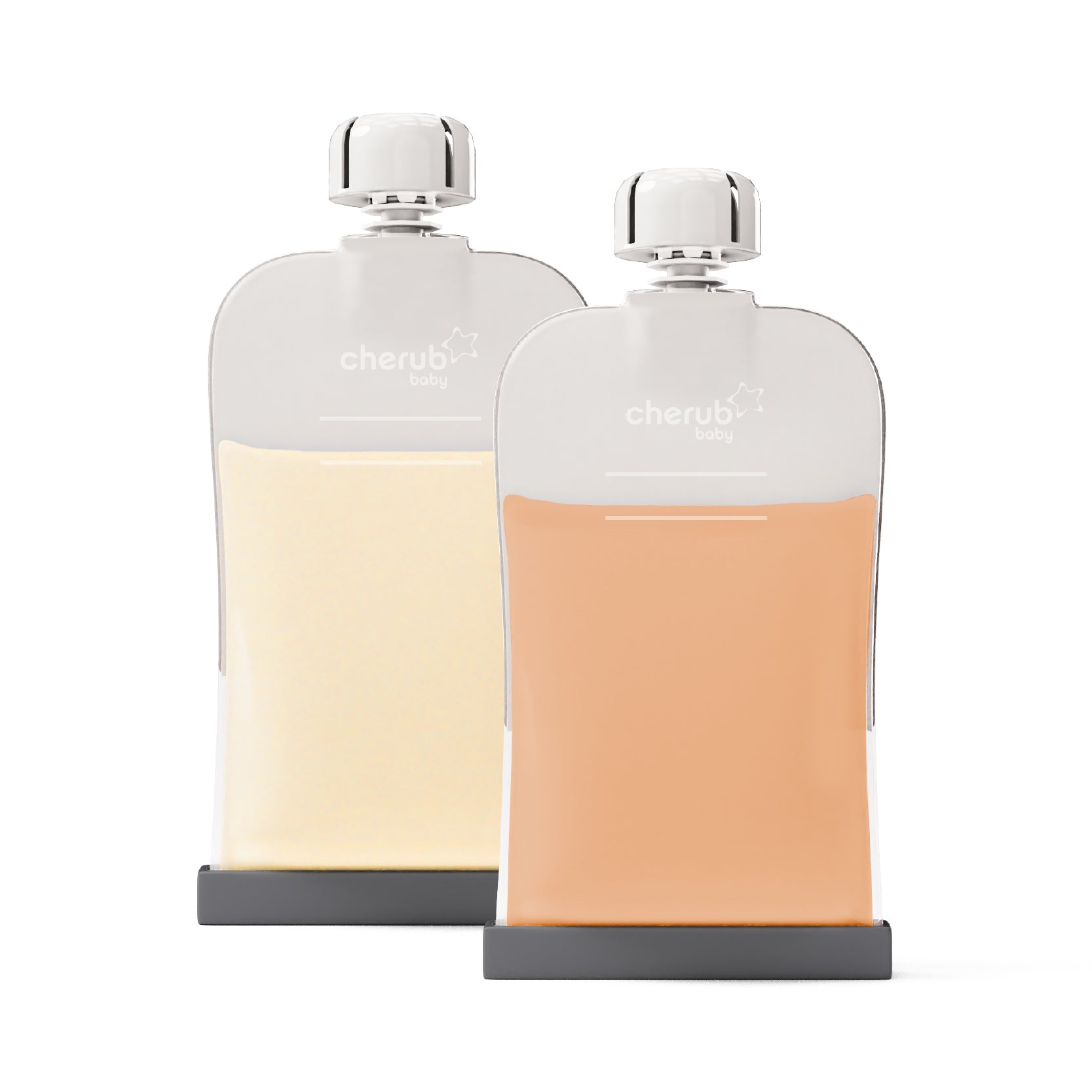
Plastic may suit you if keeping the initial cost and weight as low as possible are your priorities, or if you only expect to use reusable pouches occasionally.
Think about your typical routine before making a decision. Will you be freezing baby food every week? Will the pouches be used every day? Do you need them to go into the dishwasher? Will your child continue using them for snacks and yoghurt after the puree stage?
The answers to these questions can help you decide which material makes the most sense.
Why Silicone Can Be a Practical Long-Term Choice
For families who use reusable pouches frequently, silicone offers several practical advantages in one product.
Its durability makes it suitable for repeated filling, washing, freezing and everyday use. A well-designed silicone pouch can also continue to be useful beyond the early stages of solids, making it suitable for snacks, yoghurt, fruit purees and other foods as your child grows.
The most important thing is not simply choosing silicone over plastic. Look for a well-designed, food-safe pouch with clear instructions for cleaning, storage and temperature use.
A good reusable pouch should fit naturally into your feeding routine rather than creating more work.


